
The land
Chianti Classico: one landscape, a thousand nuances. The land is not a backdrop: it is part of the wine.
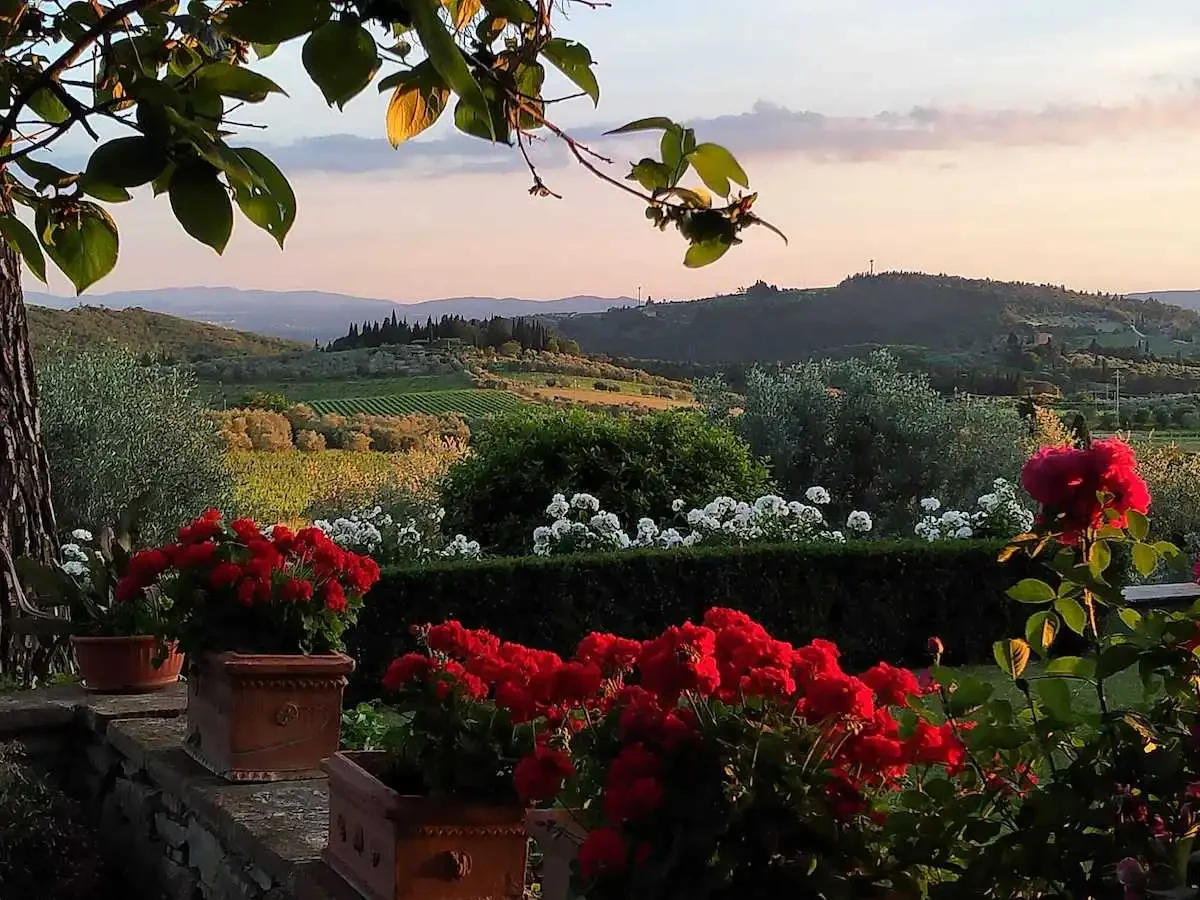
Chianti Classico
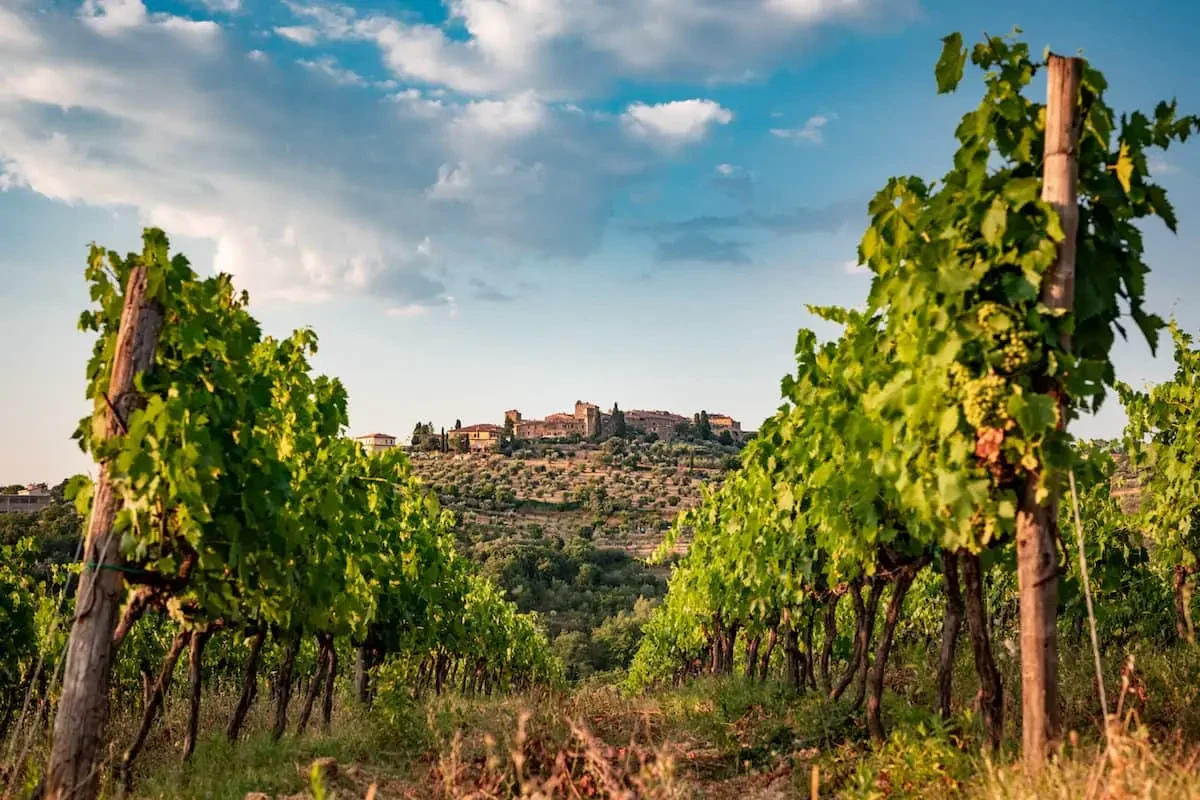
Chianti Classico, the heart of Tuscany, is one of Italy's most celebrated wine regions, rich in tradition and culture. Between Florence and Siena the production area covers seventy thousand hectares, yet vineyards take up only fifteen per cent of it: the rest is woodland, olive groves, fields and villages.
It is a land of great diversity: a thousand nuances of soil, different climates and altitudes, a biodiversity that defines the appellation. Chianti Classico is not just an appellation: it is a cultural, agricultural and human landscape.
A long history: from the Etruscans to the Black Rooster
Ancient origins
The history of Chianti has Etruscan roots: vines were grown and wine was made here centuries before Christ, even if the first results, too acidic, needed honey and herbs to sweeten them. The Etruscans were the first to transform the landscape, moving from grazing to farming; the Romans developed the agricultural economy and began to grow olives.
The Chianti League and the edict of 1716
As early as the 1400s Chianti was establishing itself as a wine of excellence. To protect the name, in 1444 the Chianti League forbade harvesting before the feast of Saint Michael, 29 September, to guarantee a minimum ripeness. In 1716 Grand Duke Cosimo III issued an edict fixing the boundaries of the production area and punishing smuggling and counterfeiting: one of the first examples of wine regulation in the world.
Chianti and Chianti Classico are not the same thing
Both are DOCG, but with different rules, areas and consortia. Historically and geographically there is only one "Chianti": the territory identified in 1716, eight municipalities between the provinces of Florence and Siena. Only here is Chianti Classico produced, with the Black Rooster on the label. The wine called "Chianti", instead, is made across much of Tuscany, outside this area. Chianti and Chianti Classico are by tradition blended wines, whose grape base has changed over the centuries: today Chianti Classico is at least eighty per cent Sangiovese.
Altitude, exposures and microclimate
Topography is part of Chianti's identity. To the east run the Chianti Mountains, separating the region from the Arno valley, with the highest point at Monte San Michele, 893 metres. A second, lower but equally important ridge runs from San Donato in Poggio through Castellina in Chianti to Vagliagli, dividing the territory into an inner part and an outer part open towards the sea.
Casa Sola sits on this second ridge, in the San Donato in Poggio subzone, at an average altitude of 330 metres with a mainly south-western exposure. The nearby Tyrrhenian Sea and the openness to the Mediterranean bring breezes that keep temperatures stable and stretch ripening a little: winters are mild and bring flowering forward, but the less hot summer means the harvest comes at the end of September or in the first two weeks of October.
Temperatures, rarely below freezing, range from 0 to 31 degrees; rainfall is about 850 millimetres a year, concentrated in autumn and spring, especially in April and November.
Soils and landscape
Soils and geology
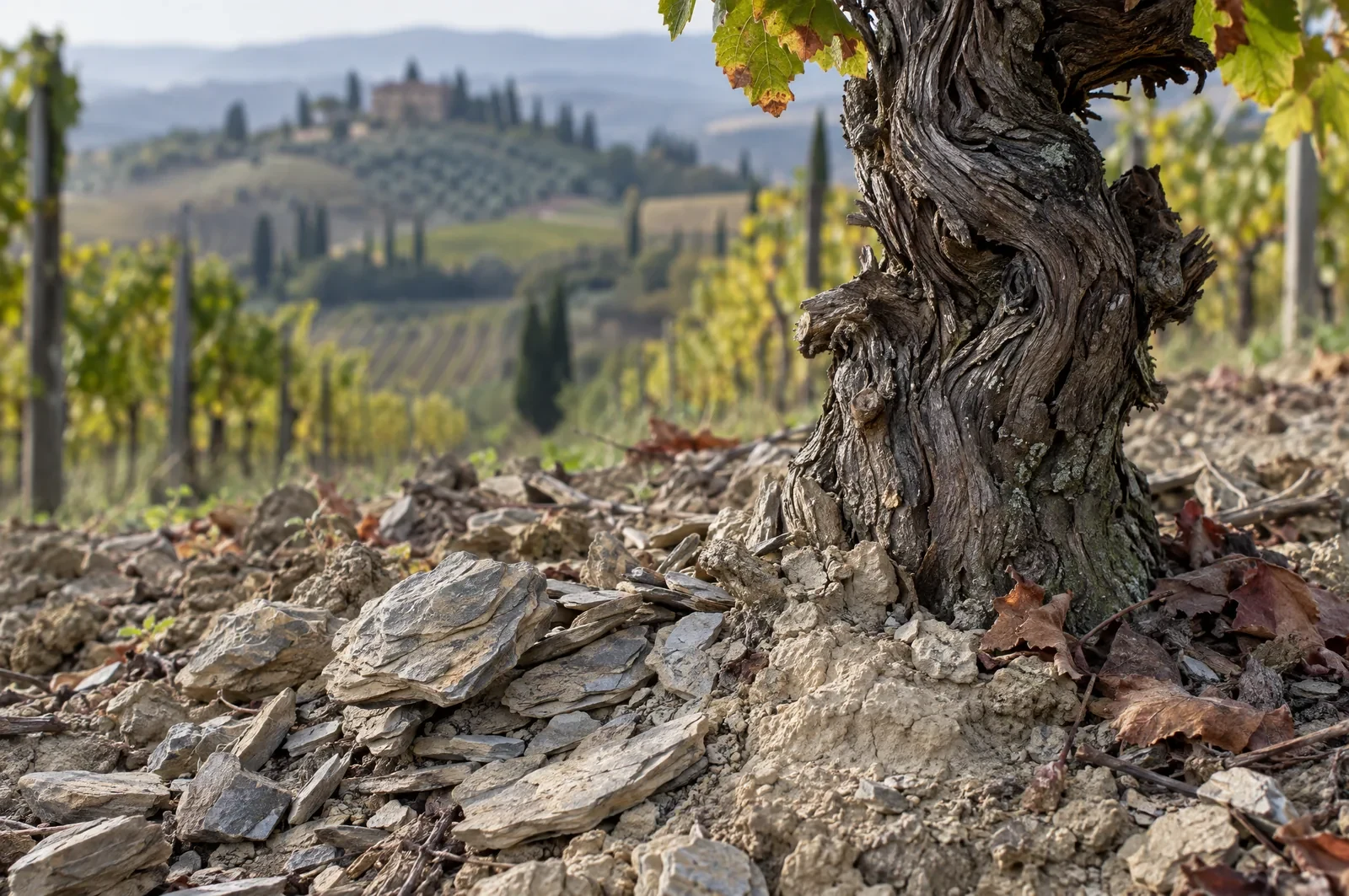
The soil at Casa Sola varies a great deal: galestro prevails, the schistous marl that flakes apart and drains well, but there are areas with clayey, fertile components alternating with stonier ground. The geology of Chianti Classico is largely calcareous, with marly and clayey limestones and fossil marine sediments: soils that hold just enough moisture and drain the rest, while millennia of erosion have created the different exposures and microclimates that influence the ripening of the grapes.
The landscape of vineyards, woods and olive groves
Cypresses, junipers, tree heath and broom recall the Mediterranean maquis and give the area its character. At Casa Sola olive groves and vineyards alternate, creating a natural barrier against disease, and woodland covers a good part of the eighty hectares: it shelters the vines from the wind, regulates water and is home to wildlife.
The Additional Geographical Units
To underline the bond between wine and land, the Chianti Classico area has been divided into eleven Additional Geographical Units with homogeneous characteristics: Castellina, Castelnuovo Berardenga, Gaiole, Greve, Lamole, Montefioralle, Panzano, Radda, San Casciano, San Donato in Poggio and Vagliagli. They are not a ranking but a way of recognising the diversity of the appellation; today they may appear on the label of Gran Selezione. Casa Sola lies in the San Donato in Poggio unit.
The estate map
Tap a zone to find out what grows there and why.
Casale vineyard
- Soil
- Galestro and alberese
- Exposure
- South-west, 330 m
- Planted with
- Sangiovese
The vines around the house, the oldest on the estate: the Sangiovese for the Riserva and the Gran Selezione comes from here.
Land and the identity of the wine
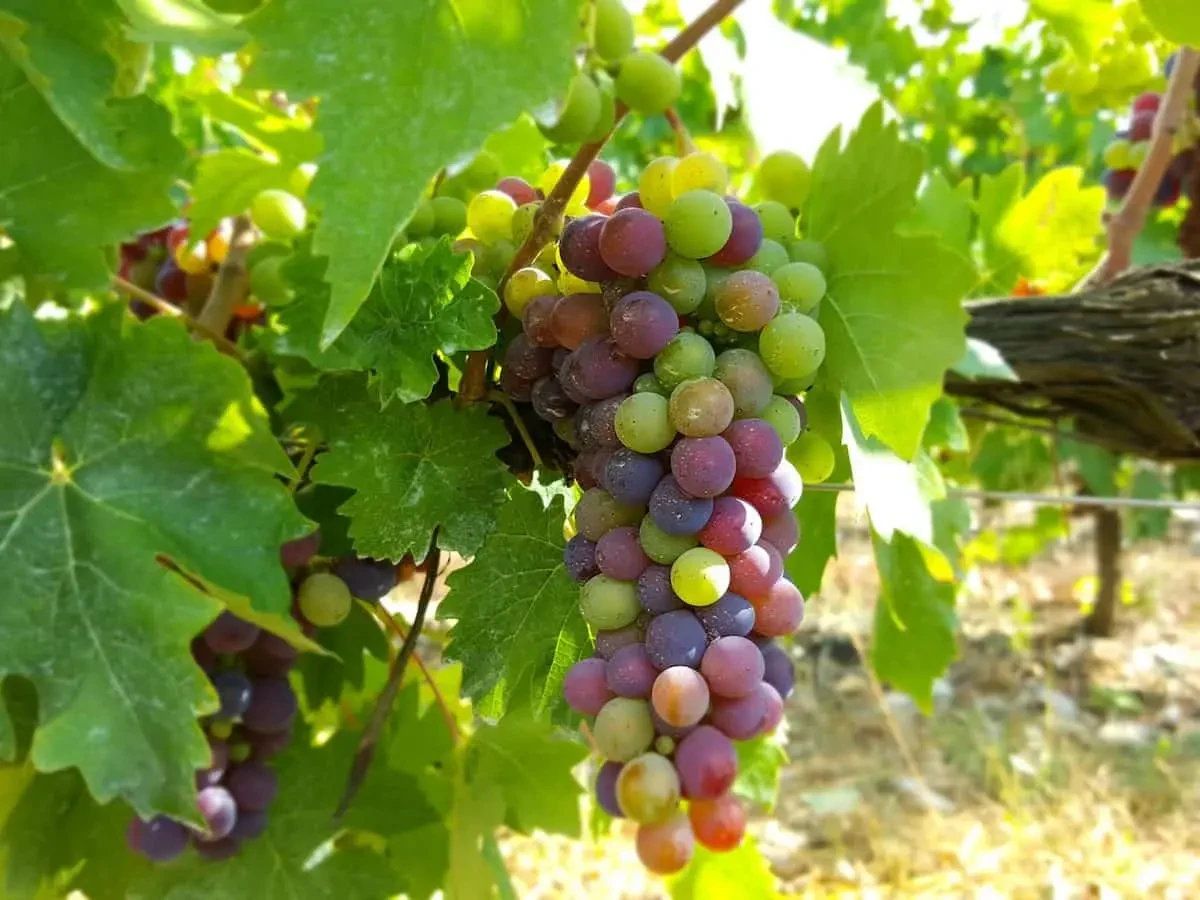
Sangiovese stands out for its sensitivity to outside influences and its ability to reflect the soil it grows in: it behaves like a sponge, absorbing the character of the soil and the climate. It is no accident that only in some areas does it express its qualities to the full.
At Casa Sola it gives a floral bouquet with notes of iris and violet and a distinctive flavour of cherry and wild berries; on galestro it finds backbone and perfume, where clay is more present it gains structure. Harvesting at the right moment, plot by plot, means bottling exactly these differences.
The land is not a backdrop. It is part of the wine.
Come and see it for yourself
A walk among vines and olive trees, the cellar and a tasting on the terrace overlooking San Gimignano.
Book a visit