
Shipping to Europe and the USA  ·  Visits and tastings every day 9 am–5 pm, by reservation

The cellar

From harvest to bottle: natural yeasts, steel, concrete and wood, and time that does the rest.

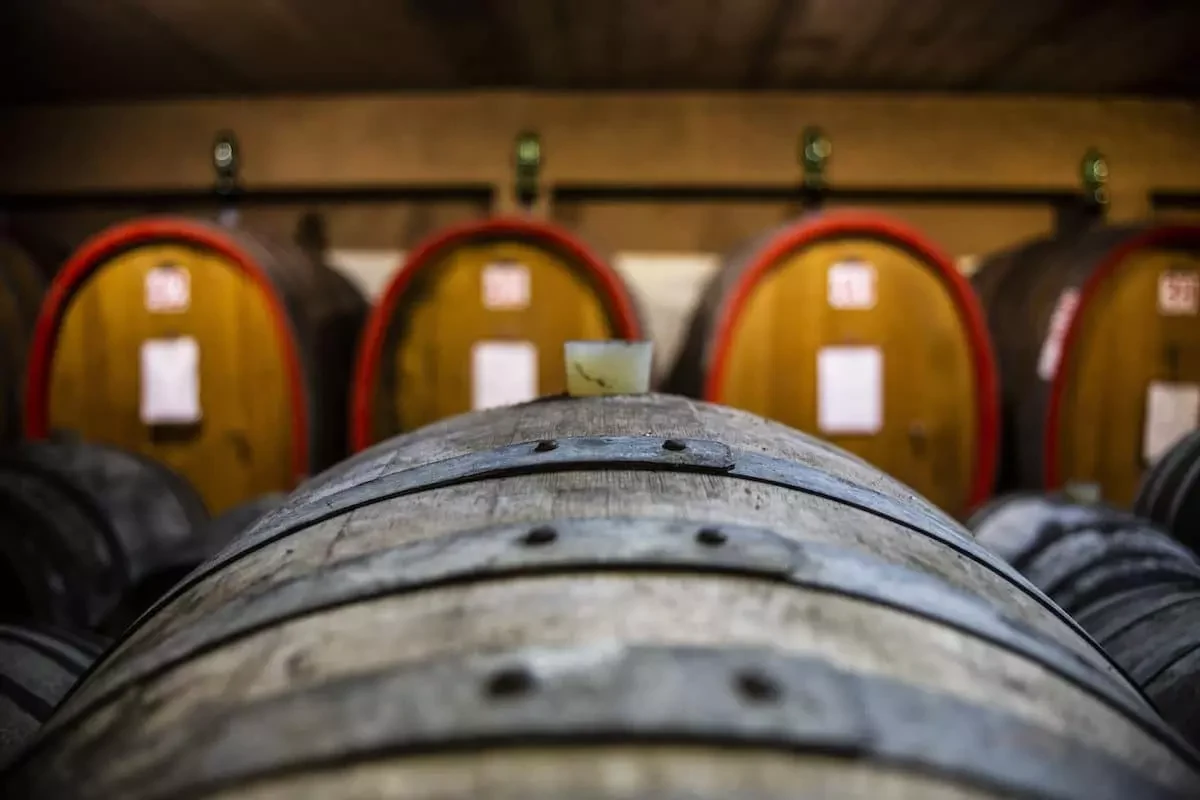
Barrels in the Casa Sola ageing cellar
The ageing cellar.

The beating heart

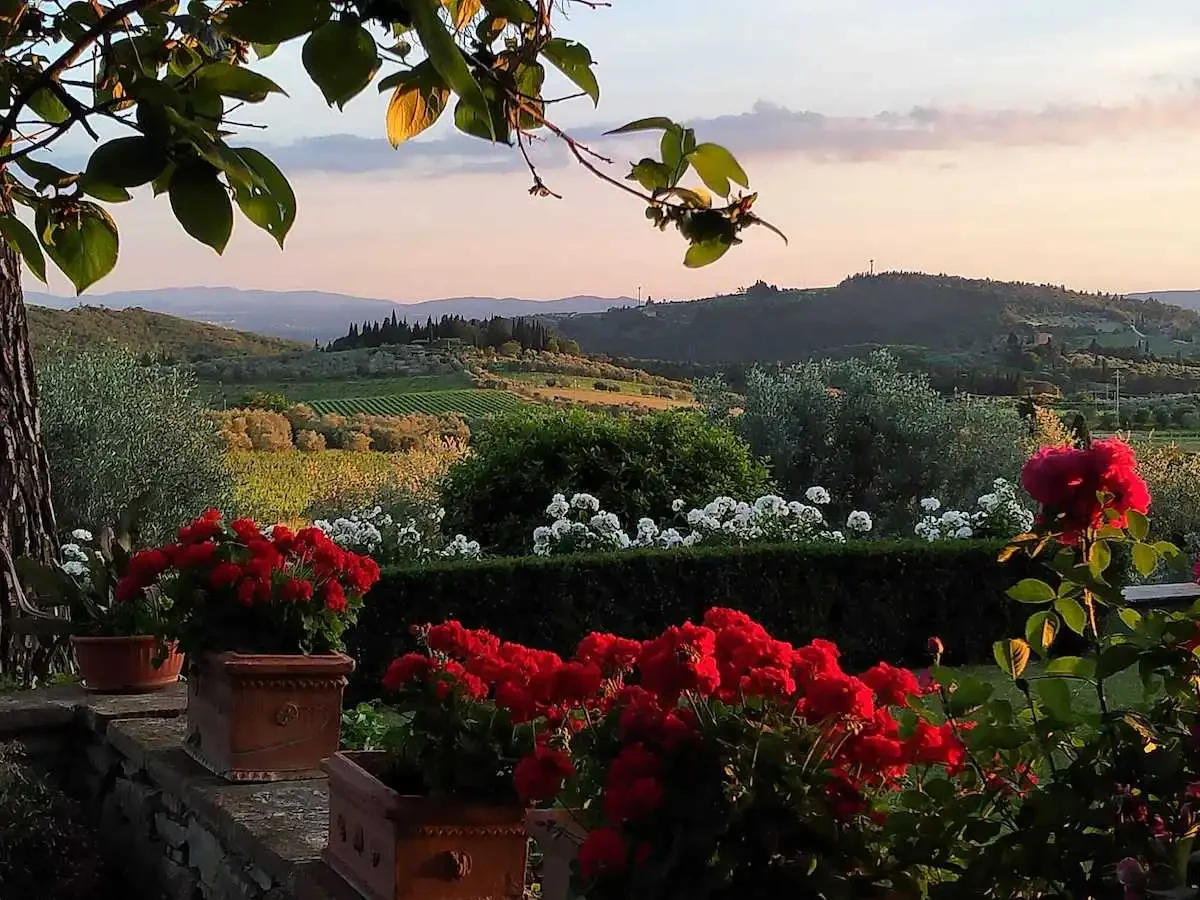
The cellar is the beating heart of Casa Sola, the place where art, science, passion and experience come together to get the most out of every bunch. It stands beside the villa, with the offices and the tasting room: from the terrace you see San Gimignano, below the wine ferments and rests.

Here we tell the production process step by step, without repeating our philosophy: what happens to the grapes from harvest to bottle, in which vessels and for how long.

Harvest and grape selection

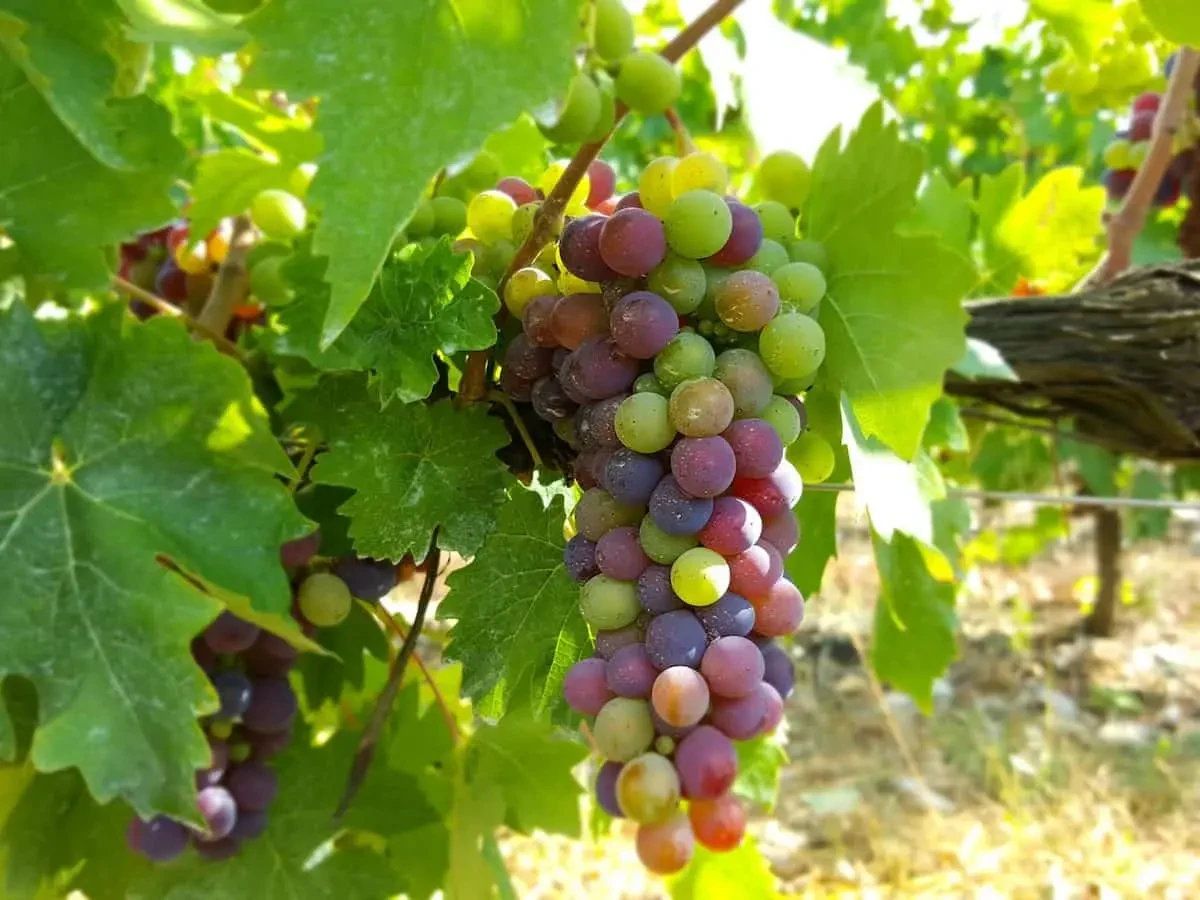
Everything starts with hand picking, between the end of September and the first two weeks of October, plot by plot: the grapes reach the cellar in crates, quickly and smoothly, with logistics planned in advance so that every bunch is processed at the right moment.

In the cellar the bunches are sorted and the lots kept apart: each vineyard and each variety follows its own path until blending.

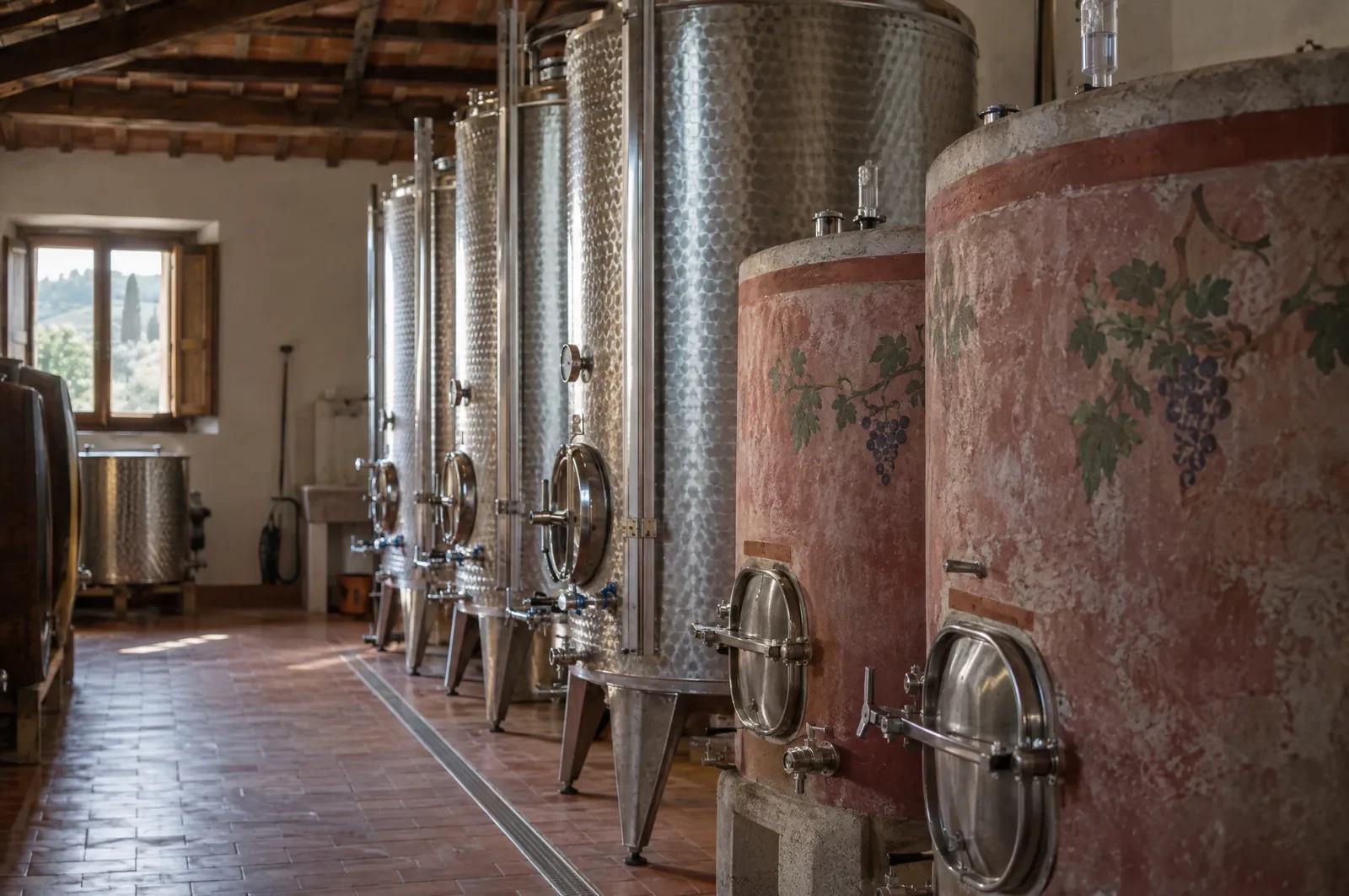
Stainless steel tanks and concrete vats for fermentation
Steel and concrete for fermentation.

Fermentation

We use only the natural yeasts found on the skins of our grapes: nothing is added, except small amounts of sulphites. A few days after picking, these yeasts begin to turn the sugars into alcohol, producing heat and carbon dioxide.

That is why fermentation takes place at controlled temperature, below 35 degrees, in stainless steel tanks and concrete vats: steel for precision, concrete for thermal inertia and natural micro-oxygenation. Each plot ferments on its own.

Cellar capacity

Steel, concrete, wood.

Stainless steel tanks from 10 to 130 hectolitres, concrete vats from 50 to 125, Slavonian oak casks of 20 and 30 hectolitres, French oak tonneaux and barriques.

Each vessel has a job: steel and concrete for fermentation and storage, large casks for an ageing that respects the fruit, small wood where structure is needed.
0hectolitres in steel
0hectolitres in concrete
0hectolitres in Slavonian oak
0hectolitres in small French oak
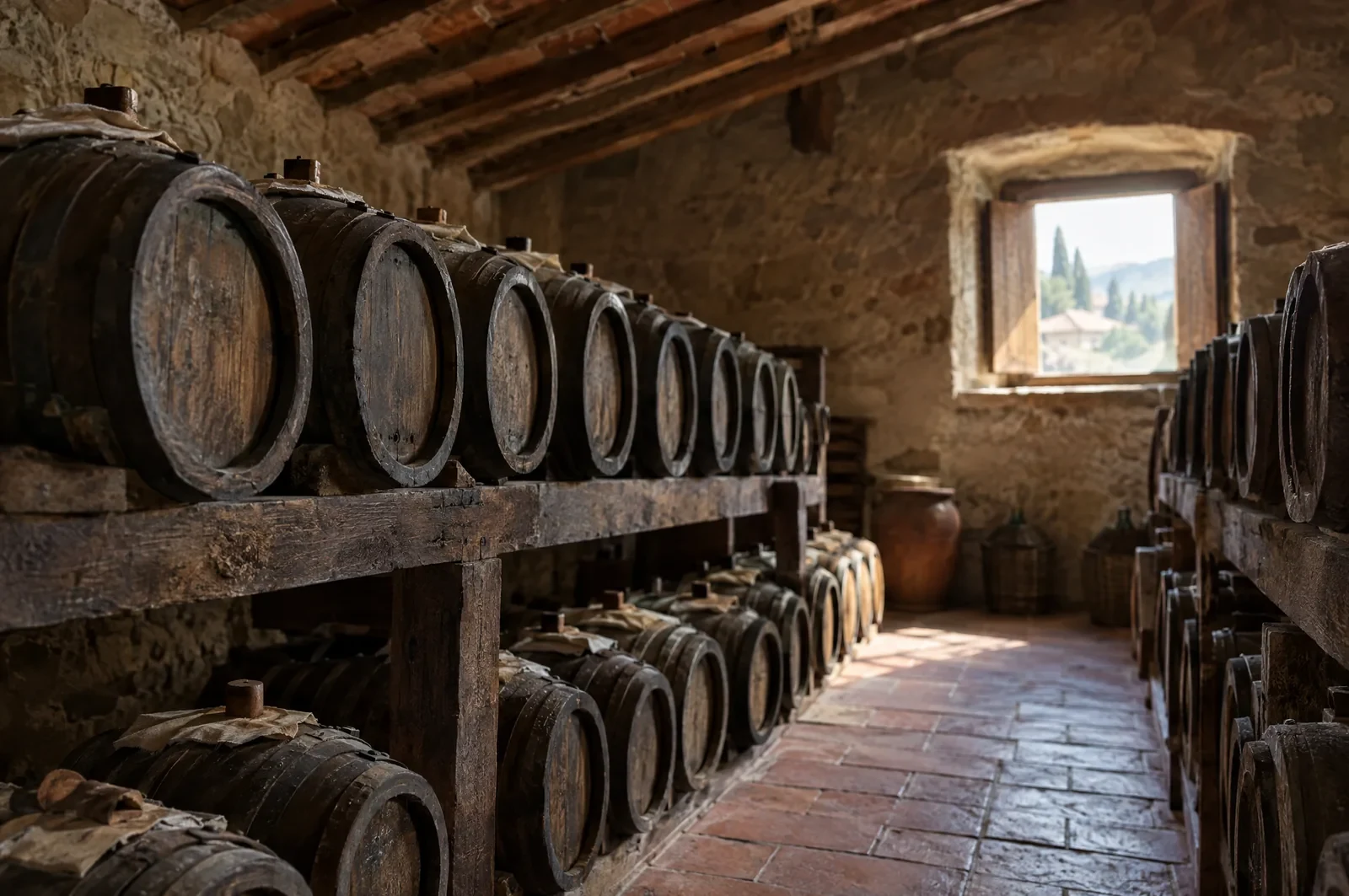
Small wooden casks for Vin Santo under the roof
The caratelli of the Vin Santo.

Ageing and the vessels

Wood accompanies, it does not cover. Chianti Classico ages in large casks, the Riserva for at least twenty-four months between wood and bottle, the Gran Selezione for at least thirty: these are the times set by the regulations, and we stay within them with room to spare.

Vin Santo ages for five years in caratelli, the small casks of Tuscan tradition, under the roof, where summer heat and winter cold do their slow work.

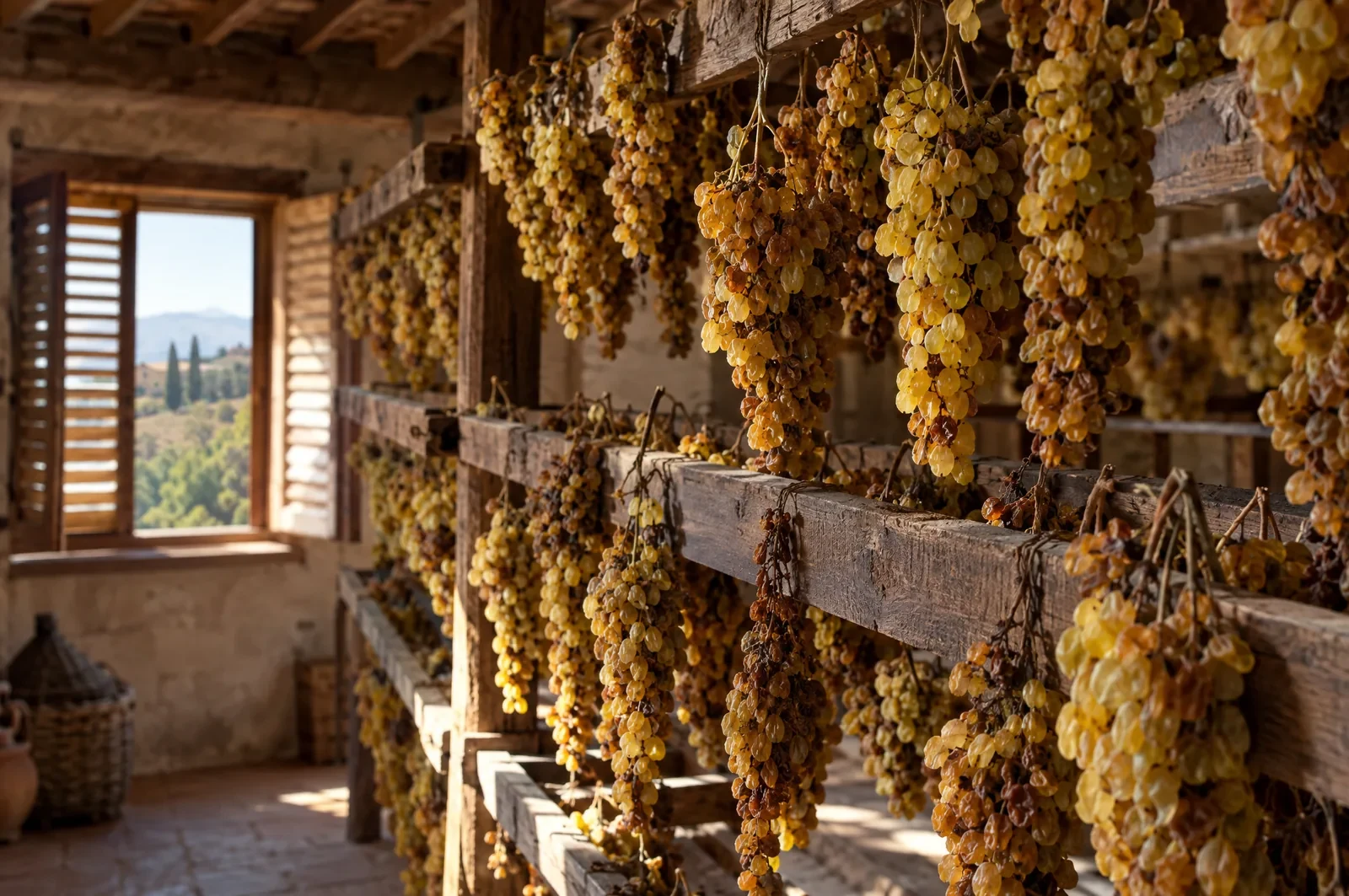
Malvasia and Trebbiano grapes hung to dry
Malvasia and Trebbiano hung to dry.

Vin Santo: the drying of the grapes

Following tradition, we hang the Malvasia and Trebbiano grapes as soon as they are picked and let them dry in an airy room for about four months, until the sugars concentrate.

After a gentle pressing the must ferments and goes into the caratelli: five years, and then the cantucci biscuits.

Blending and bottling

Each vineyard and each variety ferments on its own and ages on its own. Blending comes afterwards, when the wine has spoken: it is the moment when we decide what will be Chianti Classico, what Riserva, what will stay out.

Then the bottle, which for Riserva and Gran Selezione is part of the mandatory ageing (at least three months), and the rest before sale. We choose lightweight glass bottles to cut transport emissions: the wine does not change, the footprint does.

Visit the cellar

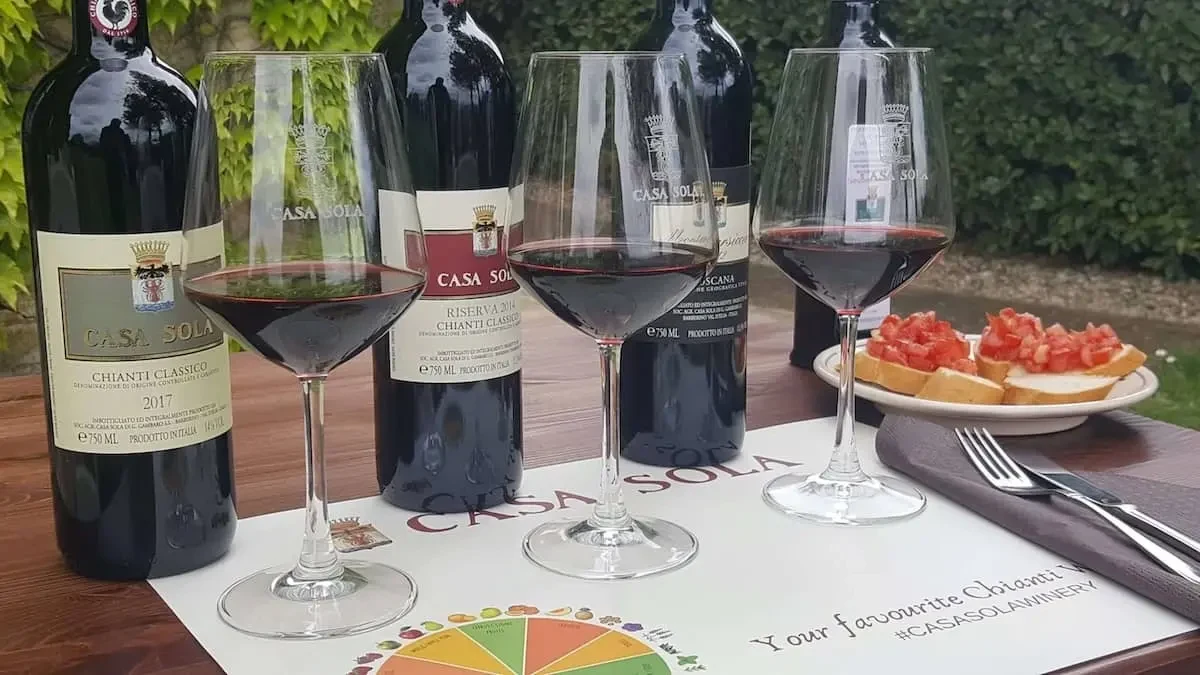
The path from harvest to ageing is part of every visit: from the tanks to the casks, then onto the terrace with a glass.

Book a visit
Book a visitWhatsApp