Pici with white ragù and Chianti Classico: why it works
A family recipe and the wine that goes with it, served at 16-18 degrees in a tulip glass.
 CASA SOLAFATTORIA · CHIANTI CLASSICO
Chianti Classico at the table: traditional recipes, pairings with our wines, the dishes of the season.
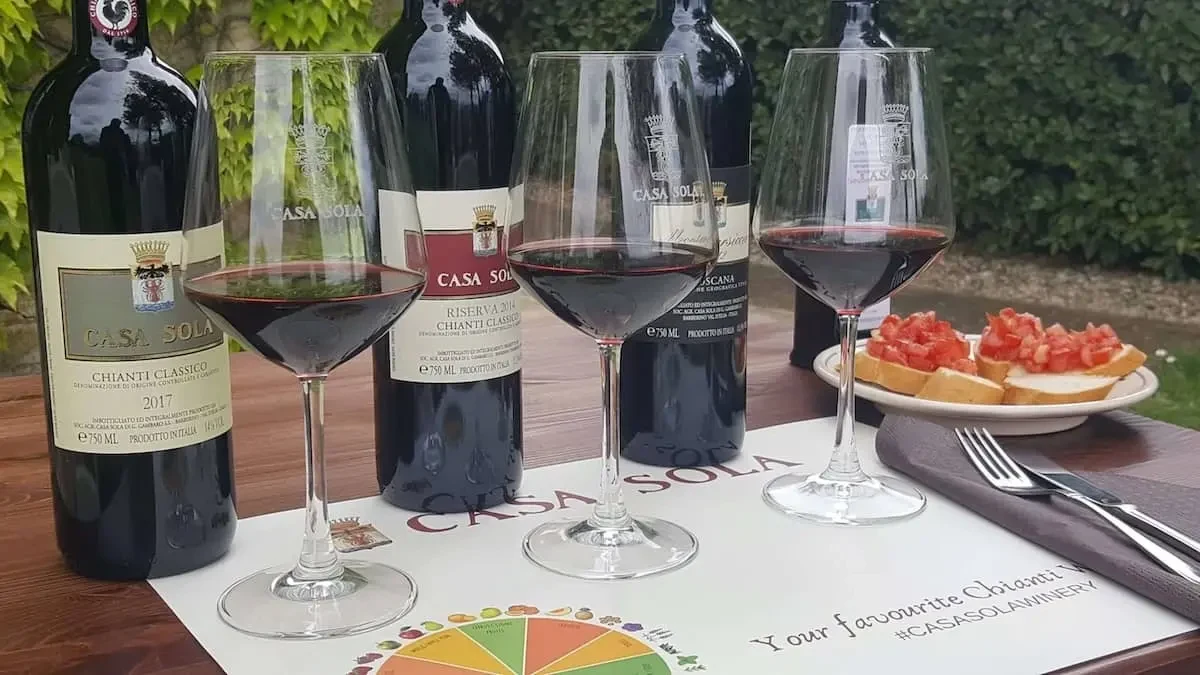
In Tuscany wine is never alone: it sits with unsalted bread, with new olive oil, with ribollita in winter and panzanella in summer, with pici and with the bistecca. Chianti Classico was born for this cooking, poor in ingredients and rich in flavour, and Sangiovese, with its acidity and its tannin, accompanies it better than any other.
Here we gather traditional recipes, pairings with our wines and the dishes of the season: every dish has at least one Casa Sola wine beside it, with the reason for the choice. For those who have already bought a bottle and want to open it the right way, too.
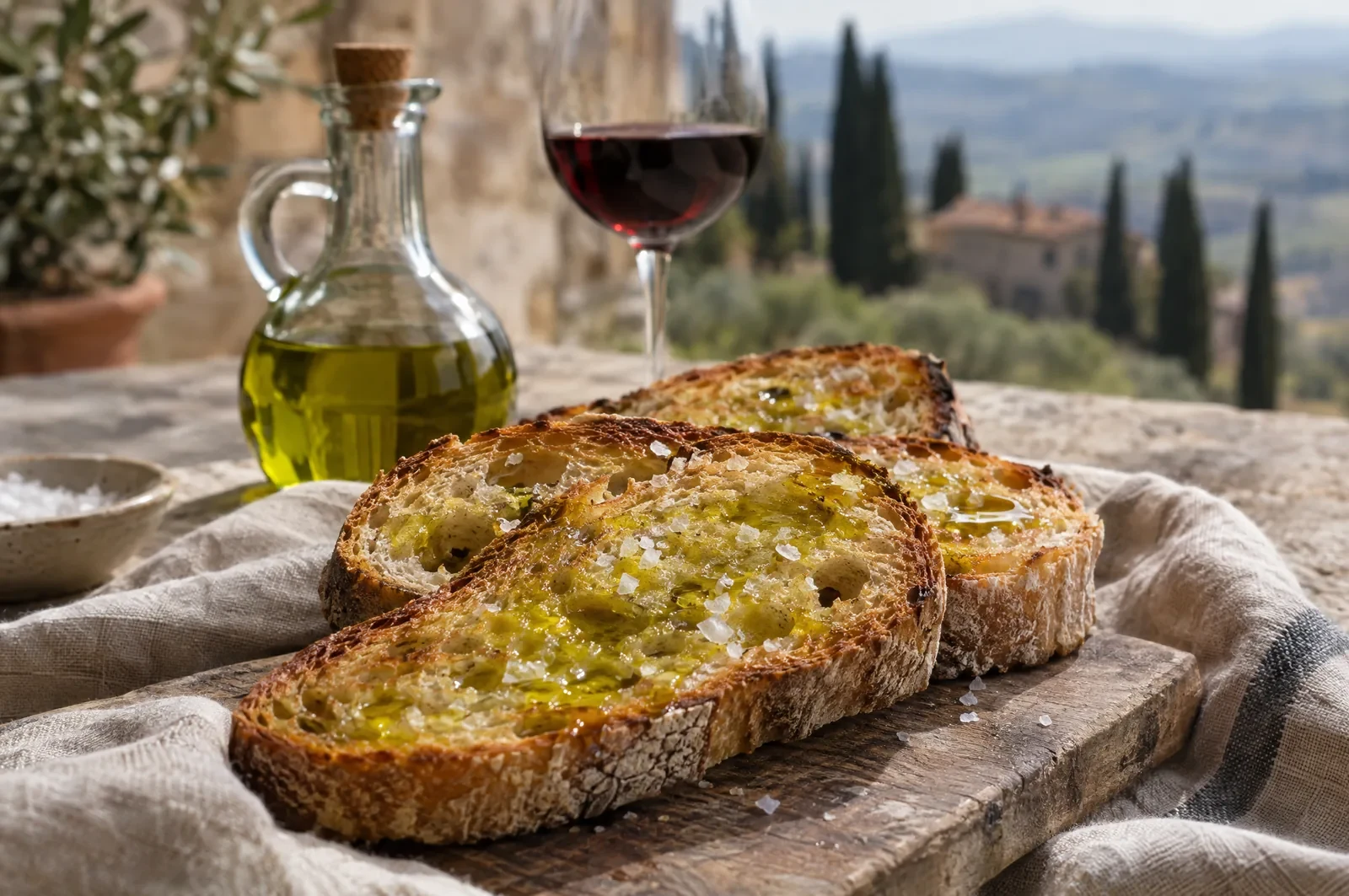
The simplest recipe in Chianti, and the first thing we serve to anyone who arrives at the winery: Tuscan bread toasted over embers or in the oven, rubbed with a clove of garlic, a generous pour of new extra virgin olive oil and a pinch of salt. Eat it from November, when the oil is freshly pressed and still peppery.
The wine: Pergliamici red, cool from the cellar. A wine for drinking, fruity and honest, that does not cover the good bitterness of the oil and cleans the bread. For those who want more, the Chianti Classico annata.
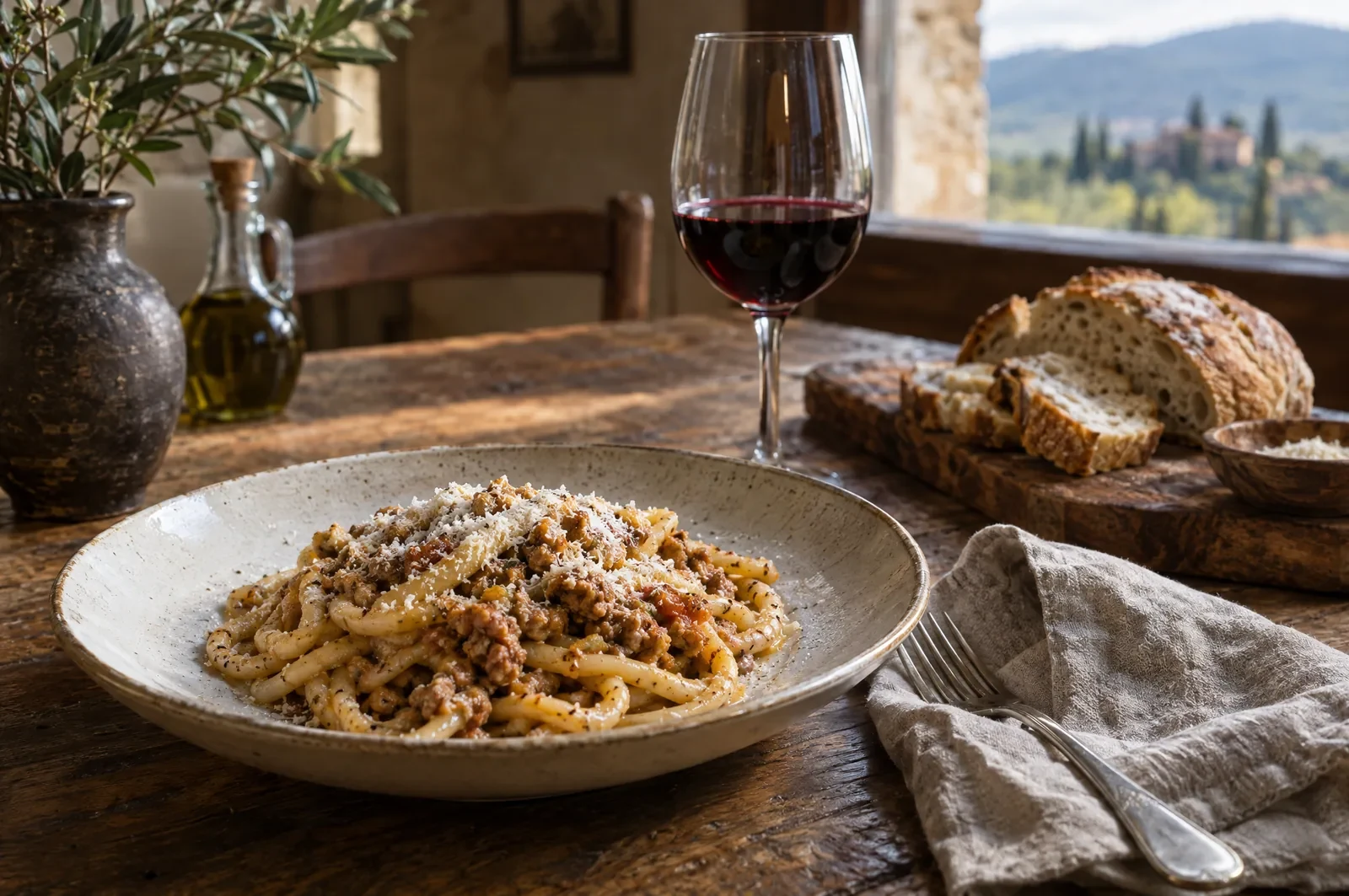
Pici are thick hand-rolled spaghetti made with flour and water, drawn out one by one. White ragù is the version without tomato: pork and veal chopped by knife, a base of onion, carrot and celery, a glass of white wine, rosemary, a long slow simmer and, at the end, a grating of Tuscan pecorino.
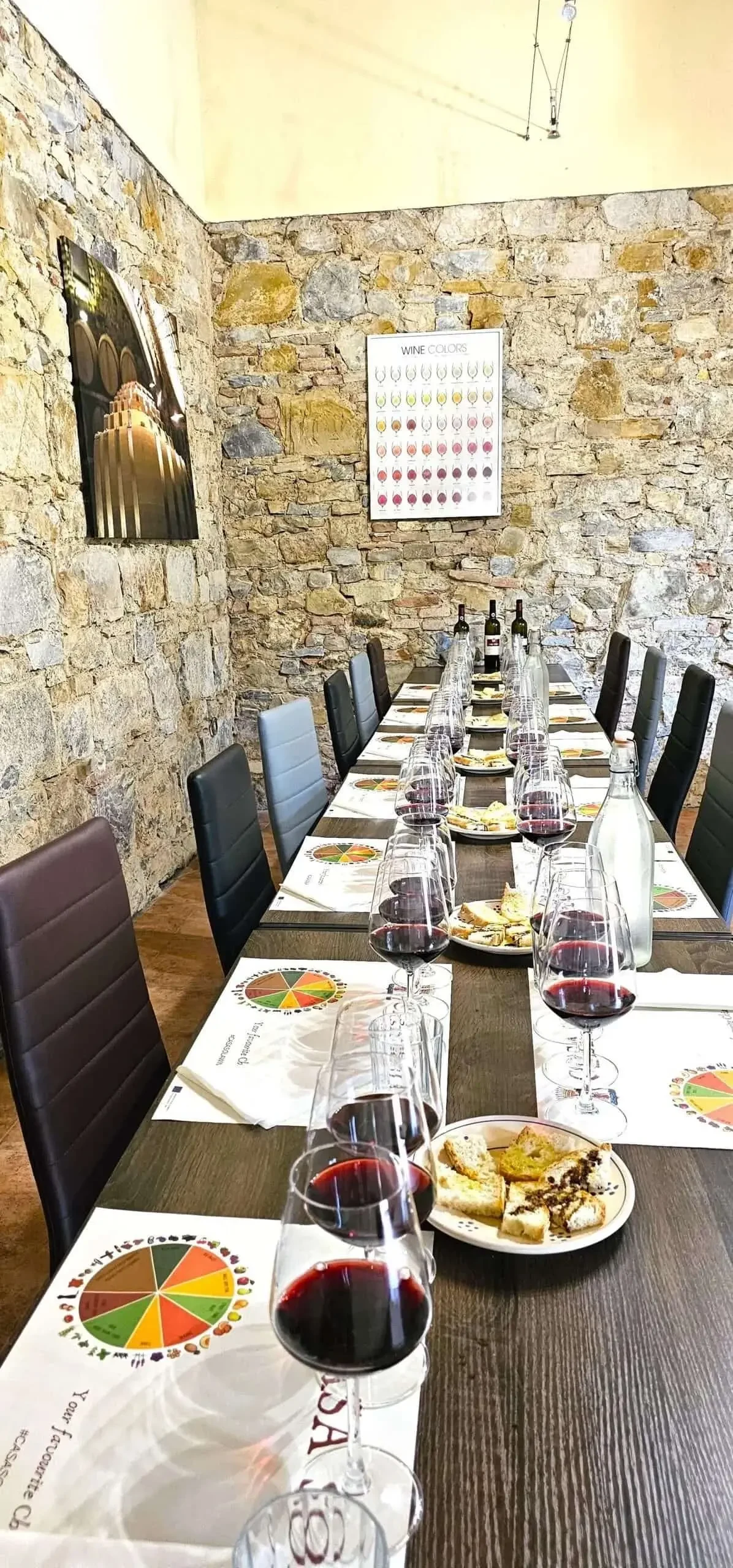
The wine: Chianti Classico. The acidity of Sangiovese lightens the richness of the ragù, the tannin binds with the meat and the pecorino, the fruit does not overpower a delicate sauce. Served at 16-18 degrees, in a tulip glass.
Pappa al pomodoro, Tuscan cured meats, roast chicken, pasta with ragù: the everyday wine that goes with almost anything coming out of a Tuscan kitchen.
Bistecca alla fiorentina, peposo, roasts and aged pecorino: more structure and more time in the glass, for dishes with character.
Game, braised meats, sliced steak with mushrooms: the important wine of the festive table, to be opened an hour before.
Spiced red meats, lamb with herbs, dark chocolate: the soft, deep Supertuscan for lovers of enveloping reds.
Pizza, pasta with tomato sauce, crostini, an aperitif on the terrace: the red for drinking, and the white for fish dishes and vegetables.
Cantucci, pecorino with honey, fig tart: cool, at the end of the meal, unhurried.
Fettunta, ribollita, beans with oil, grilled vegetables, a steak just off the fire: raw, always.
Fresh broad beans with pecorino, artichokes, wild asparagus, lamb: with young Chianti Classico.
Panzanella, tomatoes and basil, pappa al pomodoro, the outdoor grill: cool Pergliamici, Chianti Classico with the meat.
Harvest season: schiacciata with grapes, porcini mushrooms, chestnuts, the new oil of November. Riserva and Montarsiccio with substantial dishes.
Ribollita, peposo, wild boar, fagioli all'uccelletto: the important bottles, Riserva and Gran Selezione, and Vin Santo with cantucci by the fire.
Tuscan pecorino, cinta senese cured meats, unsalted bread, cantucci, Chianti Classico DOP extra virgin olive oil: our pairings start here, with what is found a few kilometres from the winery.
From the journal
Recipes and pairings told in full, with the right wine alongside. The whole journal
A family recipe and the wine that goes with it, served at 16-18 degrees in a tulip glass.
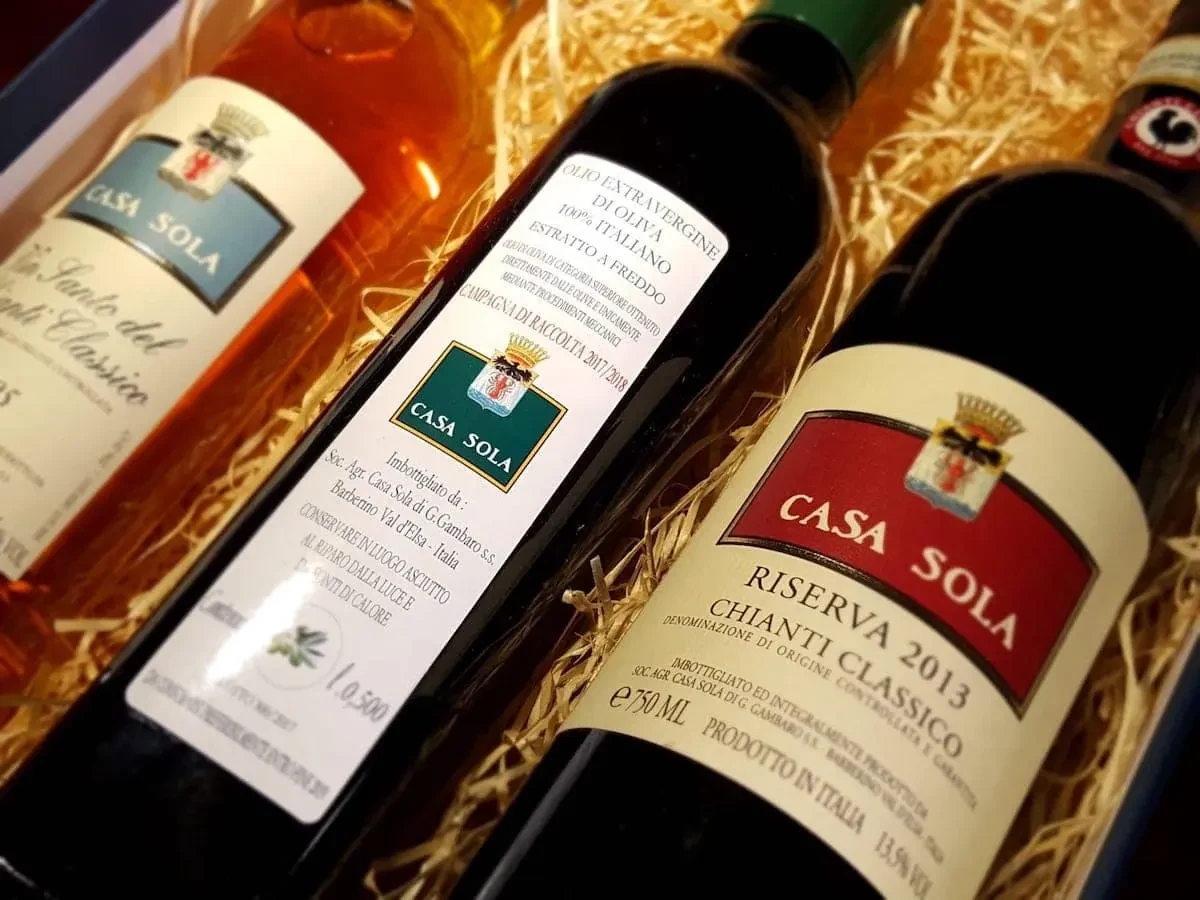
Chianti Classico, Riserva, Montarsiccio, Pergliamici and the oil, shipped from the winery.
Go to the shop